

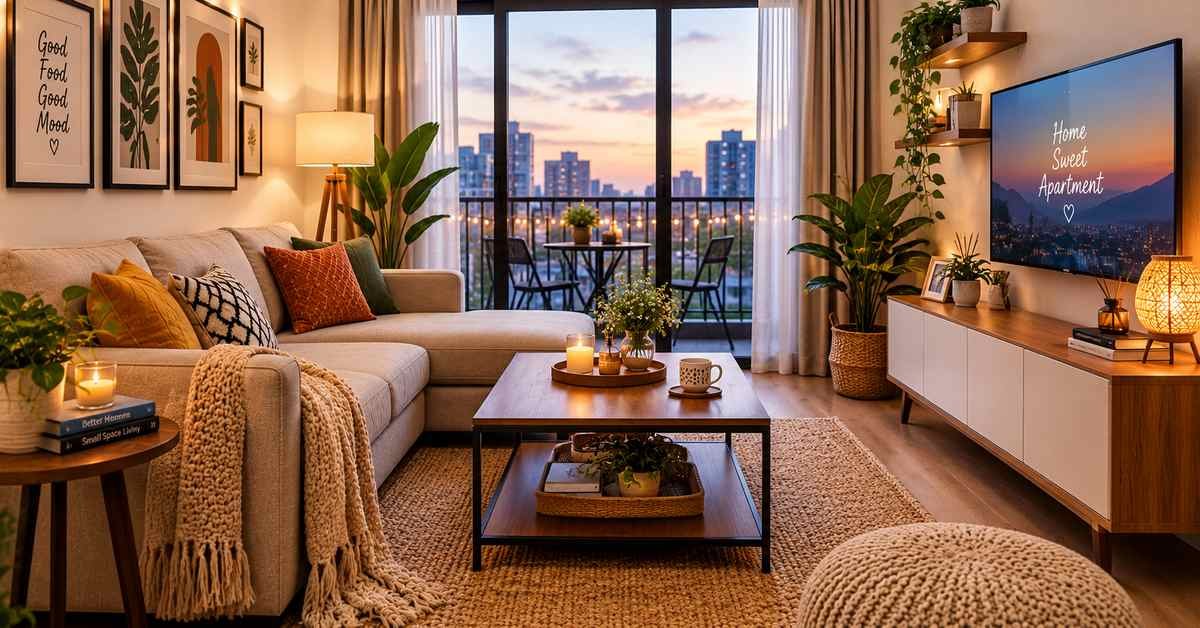
Creating a comfortable living room does not require a large apartment, expensive furniture, or a complete home makeover. With the right colors, soft fabrics, smart furniture choices, and thoughtful decorations, even a small living space can feel warm, stylish, and welcoming. The secret is to make every item useful while adding details that reflect your personality.
Cozy Apartment Living Room Decor is all about combining comfort, beauty, and practical design in a way that suits your space and budget. Whether you live in a small studio, rent an apartment, or have a compact living room, simple changes can make a noticeable difference.
In 2026, decorating a small apartment is about creating a personal space rather than following every trend. Natural textures, warm lighting, comfortable seating, and carefully chosen accessories can help you build a room that feels relaxing without looking crowded. You do not need to buy everything at once. Start with what you already own, identify what your room needs, and make improvements one step at a time.
This guide shares ten practical ideas, affordable decorating tips, helpful tables, and easy solutions for creating a beautiful living room that works for everyday life.
Choose Warm Colors for a Relaxing Atmosphere
Color is one of the easiest ways to change the feeling of your living room. The right shades can make a small apartment feel peaceful, comfortable, and visually balanced.
For a warm and inviting look, start with a simple color palette. Cream, warm white, beige, soft brown, and muted green are excellent choices. These colors work well with many furniture styles and make it easier to add decorations later.
You do not need to paint every wall. If you rent your apartment, keep the existing wall color and introduce warmth through curtains, cushions, blankets, and rugs.
Popular colors for apartment living rooms
- Warm white: Creates a bright, clean background.
- Beige: Adds softness without making the room feel dark.
- Sage green: Brings a calm, natural feeling.
- Terracotta: Adds warmth and a little color.
- Chocolate brown: Creates depth when used in small amounts.
- Dusty blue: Offers a relaxed look that works well with cream and natural wood.
Choose two or three main colors and repeat them throughout the room. For example, pair a beige sofa with cream curtains, brown cushions, and a muted green plant pot.
If you enjoy bold colors, use them in smaller details rather than covering every surface. A colorful cushion or artwork can become an attractive focal point without overwhelming the space.
Before buying anything, look at your existing furniture and flooring. Select colors that complement these features instead of replacing items that already work well.
Select Furniture That Fits Your Apartment
Furniture size has a major effect on how comfortable a living room feels. A large sofa might look beautiful in a showroom but leave very little walking space in a small apartment.
Before purchasing furniture, measure the room carefully. Record the length and width of the space, doorway sizes, window positions, and locations of electrical outlets. Also, measure any furniture you plan to bring home.
The best furniture for a small apartment is comfortable, properly sized, and useful for everyday activities.
Consider a compact sofa, a small armchair, or a loveseat if your room has limited floor space. Furniture with raised legs can make the floor more visible, helping the room feel less crowded.
Multifunctional furniture is another smart choice. A storage ottoman can provide extra seating, hold blankets, and serve as a footrest. A coffee table with a lower shelf offers room for books and baskets. Nesting tables can be separated when guests arrive and stacked together when you need more space.
Avoid buying furniture simply because it is small. Extremely tiny furniture may look out of proportion or feel uncomfortable. Choose pieces that match your room’s size and your family’s needs.
Keep the main walking paths clear, especially between the entrance, sofa, and other frequently used areas. If you cannot move around comfortably, reconsider the layout before purchasing more decorations.
Layer Soft Textures for Extra Comfort
Soft textures make a living room feel inviting and help create a space where you want to relax after a busy day.
For Cozy Apartment Living Room Decor, think beyond colors and consider how different materials feel together. Cotton, linen, wool, knitted fabrics, and soft upholstery can add warmth and visual interest.
Start with the sofa. Add two or three cushions in complementary colors and place a comfortable throw blanket over one arm. Choose fabrics that feel pleasant against your skin and are easy to clean.
Next, consider a rug. A rug can make a seating area feel connected, especially when your living room shares space with a dining area or kitchen. Choose a size that allows the main seating furniture to sit on or near its edges, depending on your layout.
You can also mix different materials to prevent the room from looking flat.
For example, combine a smooth wooden coffee table with a woven basket, a soft rug, and linen curtains. The contrast creates interest without requiring bright colors or expensive decorations.
However, avoid adding too many cushions, blankets, and decorative fabrics. Excessive layering can make a small room feel messy and create extra cleaning work.
If you have pets or children, choose washable cushion covers and durable fabrics. Keep delicate materials for items that receive less daily use.
The goal is to create a comfortable room that looks attractive but remains practical for real life.
Use Lighting to Create a Warm Glow
Lighting changes how a room looks and feels, especially during evenings and darker months.
A single bright ceiling light may provide enough general lighting, but it can make a living room feel less relaxing. Instead, combine different light sources to create a softer atmosphere.
Begin with the existing ceiling light. If you can choose its bulb, consider a warm-white option for a comfortable evening setting. Always check that the bulb is suitable for the fixture and any dimmer switch.
Add a floor lamp beside the sofa for reading. A small table lamp can provide gentle light near an armchair or side table. If your apartment has limited floor space, consider wall-mounted lights, provided installation is allowed.
Natural light is equally important. Keep windows reasonably clear during the day and avoid placing tall furniture directly in front of them when possible.
Light-colored curtains can soften sunlight while maintaining a bright appearance. If privacy is important, use suitable window coverings that allow you to control light throughout the day.
For energy savings, the U.S. Department of Energy recommends energy-efficient LED lighting. Its guidance explains that efficient lighting can reduce electricity use compared with less efficient options. .
A practical lighting plan should include general light, focused light for activities, and softer light for relaxing. You do not need expensive designer lamps to achieve this effect.
Decorate Walls Without Making Them Look Crowded
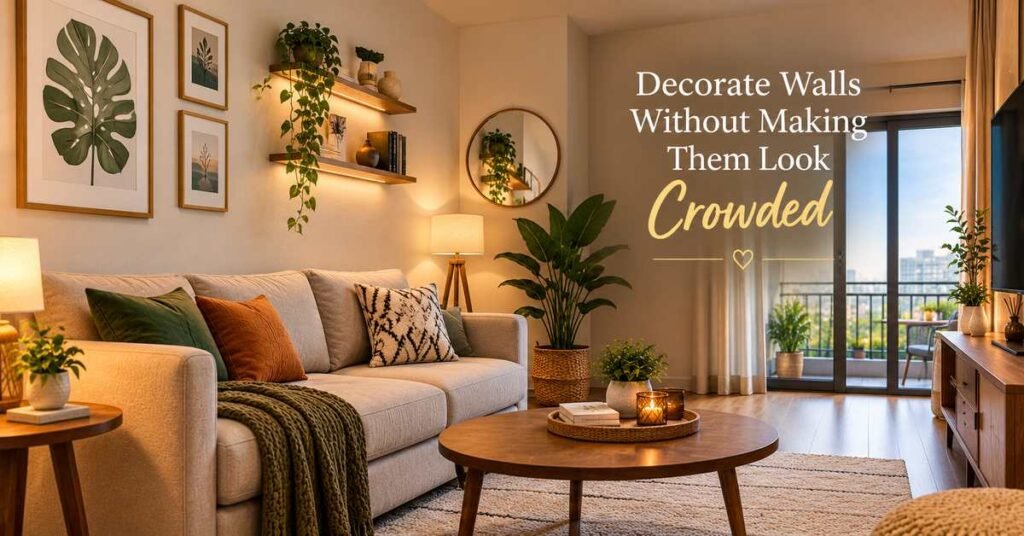
Empty walls can make a living room feel unfinished, but filling every space with pictures and decorations can create visual clutter.
A better approach is to choose a few meaningful pieces and give them room to stand out.
Artwork is a simple starting point. You might choose a landscape, abstract print, botanical illustration, or photograph that matches your preferred colors. One larger artwork can sometimes create a stronger effect than many tiny pictures scattered across the wall.
A gallery wall can also work well. Select a small collection of frames with related colors or shapes, then arrange them on the floor before hanging them. This allows you to test the layout without making unnecessary holes.
For renters, removable picture hooks or other approved hanging products can help protect the walls. Always check the weight limits and follow the manufacturer’s instructions.
Mirrors are another useful decorating feature. Placing a mirror where it reflects daylight or an attractive part of the room can make the space appear brighter and more open. Avoid positioning it where it creates unwanted glare.
Floating shelves can display books, small plants, framed photographs, and treasured objects. However, keep the arrangement simple and leave some empty space between items.
If you want Cozy Apartment Living Room Decor that feels personal, display objects that mean something to you rather than buying accessories simply to fill empty areas.
Before making permanent changes, check your rental agreement and ask your landlord when necessary. A beautiful living room should reflect your style without putting your security deposit at risk.
Add Plants and Natural Materials
Natural elements can make a living room feel fresh, relaxed, and connected to the outdoors.
Houseplants are a popular choice because they add color, shape, and life to a space. You do not need a large collection to enjoy their appearance. One medium-sized plant or a few smaller plants can be enough.
Choose plants according to your room’s light conditions and the amount of care you can provide. Some plants need bright indirect light, while others tolerate lower-light conditions. Check the needs of each plant before bringing it home.
If you have limited floor space, consider a small plant on a shelf or side table. Hanging planters may also work if your ceiling and rental rules allow them.
Natural materials can create a similar effect without requiring plant care. Try a woven basket, wooden tray, jute rug, cotton cushion covers, or a ceramic vase.
These materials add texture and help a room feel less artificial. They also pair well with neutral colors and many decorating styles.
Remember that natural materials are not always maintenance-free. Some fabrics stain easily, woven baskets collect dust, and wooden surfaces may need special care.
If you have pets, check whether a plant is safe for them before placing it within reach. Artificial plants are another option if you prefer minimal maintenance, although they still need occasional cleaning.
The most important rule is to choose natural details that fit your lifestyle. A few well-placed elements will usually look better than filling every corner with plants and accessories.
Make Small Spaces Feel Bigger With Smart Layouts
A small living room can still feel open and comfortable when furniture is arranged carefully.
Start by identifying the main purpose of the room. Is it mainly for watching television, reading, entertaining guests, or spending time with family? Your answer will help determine the best layout.
Place the sofa where it supports conversation and allows easy movement. If the television is the main focus, arrange seating so people can watch comfortably without blocking walkways.
Try not to push every piece of furniture against the walls automatically. In some rooms, moving a sofa slightly away from the wall creates a more balanced arrangement. In very small apartments, however, placing larger furniture against the walls may preserve valuable floor space.
Use rugs to define separate areas. In a studio apartment, a rug beneath the seating area can visually separate the living space from a dining or sleeping area.
Vertical storage is another effective solution. Tall, narrow shelves make use of wall height instead of taking up large amounts of floor space. Wall-mounted shelves can also keep everyday objects organized.
For Cozy Apartment Living Room Decor, avoid blocking windows, doorways, radiators, or ventilation openings with furniture.
Keep frequently used items within easy reach, and store seasonal decorations elsewhere when possible.
Before moving heavy furniture, sketch two or three layouts on paper. Even a simple drawing can help you compare options without repeatedly lifting furniture.
The best arrangement is not necessarily the one that looks most impressive in a photograph. It is the one that makes daily movement easy and allows everyone to use the room comfortably.
Create a Beautiful Living Room on a Budget
You can improve your living room without spending a large amount of money. The key is to decide which changes will make the biggest difference before buying anything.
Begin with a simple cleaning and organizing session. Remove items you no longer use, clear crowded surfaces, and rearrange decorations you already own.
Next, choose one or two affordable improvements. New cushion covers, a secondhand side table, a small lamp, or a washable rug may change the room’s appearance without requiring a full makeover.
Thrift stores, local resale groups, and secondhand furniture shops can offer useful pieces at lower prices. Inspect furniture carefully for damage, stability, odors, and signs of pests before bringing it home.
You can also reuse existing items creatively. A sturdy stool may become a side table, a decorative bowl can hold keys, and an attractive basket can organize blankets.
Budget-friendly decorating ideas
| Decorating item | Affordable alternative | Main benefit |
|---|---|---|
| New sofa | Refresh your existing sofa with washable covers | Saves money on major furniture |
| Expensive artwork | Frame personal photos or affordable prints | Adds personality |
| Designer coffee table | Reuse a sturdy table or wooden stool | Provides a useful surface |
| Decorative storage | Use baskets you already own | Reduces visible clutter |
| New lighting | Replace suitable old bulbs with efficient LEDs | Improves lighting efficiency |
| Expensive plants | Start with one suitable, easy-care plant | Adds a natural touch |
| New cushions | Replace covers instead of buying whole cushions | Changes the color scheme affordably |
A simple budget example
Suppose you have $100 to refresh your living room. You could spend $30 on cushion covers, $25 on a secondhand lamp, $25 on a small rug or textile accessory, and keep $20 for an unexpected need.
These amounts are only an example. Actual prices depend on your location, product quality, and available sales.
Avoid buying inexpensive items simply because they are on sale. A useful purchase is one that fits your room, serves a purpose, and lasts long enough to provide value.
Choose Storage That Keeps the Room Tidy
A beautiful living room needs practical storage. Without it, remote controls, books, chargers, toys, and blankets can quickly take over the available space.
The easiest solution is to give frequently used items a specific place.
Use a storage ottoman for blankets, a small tray for remote controls, and baskets for items that need to be collected quickly. If you have a television, choose a media unit with drawers or closed cabinets to hide cables and smaller objects.
Vertical storage can be especially useful in apartments. Tall shelving units provide space for books and decorations while using less floor area than wide cabinets. Make sure tall furniture is stable and secured according to the manufacturer’s instructions.
Do not treat every shelf as a display area. Mix useful storage with a few decorative pieces and leave some spaces open.
A simple organization system
Daily items: Keep remote controls, coasters, and frequently used chargers in an easy-to-reach tray or drawer.
Weekly items: Store magazines, books, and extra cushions in a designated place.
Occasional items: Keep seasonal decorations and spare blankets in closed storage or another suitable area.
Items you no longer need: Donate, recycle, or dispose of them responsibly where possible.
If your living room doubles as a workspace, choose a compact desk or a small table that can serve more than one purpose. Store work supplies together so you can clear the area when the working day ends.
Good organization does not mean hiding everything. It means keeping useful items accessible while preventing unnecessary clutter.
Add Personal Details for a Unique Look in 2026
The most welcoming living rooms reflect the people who use them. Trends can provide inspiration, but your space should not look like an exact copy of a showroom.
In 2026, you can explore a range of styles, from natural and understated interiors to colorful rooms filled with artwork and personal objects. You do not have to follow one trend completely.
Start with items that already have meaning. Family photographs, travel souvenirs, favorite books, handmade decorations, or artwork from a local artist can make the room feel more personal.
Choose a main style direction, such as modern natural, relaxed traditional, or colorful contemporary. Then add a few details from other styles if they work well together.
For example, a neutral sofa and wooden coffee table can support colorful cushions, a patterned rug, and an unusual lamp. The room will feel coordinated because the larger pieces provide a steady foundation.
Avoid buying decorations only because they are popular online. Trends change, and replacing everything regularly can become expensive.
Instead, use affordable accessories to experiment with new colors and patterns. If you grow tired of a look, you can change a cushion cover or move a framed print without replacing major furniture.
Also, think about everyday comfort. Leave enough room to put down a drink, provide comfortable seating for guests, and choose materials that suit your cleaning routine.
A successful room combines beauty with function. When your living room supports your daily habits and reflects your personality, it becomes a place you genuinely enjoy spending time in.
Visual Guide: Colors and Textures That Work Together
Use the following table to plan a coordinated living room without purchasing unnecessary items.
| Style | Main colors | Recommended textures | Suitable accessories |
|---|---|---|---|
| Warm modern | Cream, beige, brown | Linen, wood, cotton | Simple artwork and ceramic vases |
| Natural and calm | Sage green, ivory, sand | Jute, cotton, light wood | Plants and woven baskets |
| Soft contemporary | Warm white, dusty blue, taupe | Knitted fabric, velvet, smooth wood | Table lamps and framed prints |
| Earthy and relaxed | Terracotta, cream, olive | Wool, wood, woven fabric | Clay pots and textured cushions |
| Minimal and cozy | White, soft gray, warm beige | Cotton, wool, natural wood | A few meaningful decorative pieces |
A Simple Room-Planning Checklist
Use this checklist before you start decorating.
| Task | What to check |
|---|---|
| Measure the room | Record room dimensions, doorways, and windows |
| Choose a color palette | Select two or three main colors |
| Plan the furniture | Make sure walking paths remain clear |
| Check lighting | Include general lighting and a softer light source |
| Add soft furnishings | Choose a rug, cushions, or a throw where needed |
| Plan storage | Give everyday objects a designated place |
| Personalize the room | Add a few meaningful accessories |
| Review your budget | Prioritize useful purchases over unnecessary items |
One additional point deserves attention: comfort includes the quality of the indoor environment. Keep the room clean, avoid blocking air vents, and allow fresh air to enter when outdoor conditions permit. The U.S. Environmental Protection Agency explains that reducing pollution sources and improving ventilation are important ways to support indoor air quality.
Frequently Asked Questions
How can I make my apartment living room look cozy?
Use warm lighting, comfortable fabrics, a coordinated color palette, and a few personal decorations. Keep the furniture layout practical and avoid unnecessary clutter.
What colors make a small living room feel bigger?
Warm white, cream, beige, and other light shades can help a room feel brighter. Good lighting and clear walkways also make a difference.
How can I decorate my apartment living room on a low budget?
Rearrange existing furniture, reuse decorations, shop secondhand, and update cushion covers. Make small improvements before investing in expensive furniture.
How do I decorate a rented apartment without damaging the walls?
Use approved removable hooks, freestanding shelves, rugs, lamps, and decorative cushions. Check your rental agreement before making permanent changes.
What furniture is best for a small apartment living room?
Choose properly sized seating, compact tables, and furniture with built-in storage. Multipurpose pieces help you use limited space more effectively.
Conclusion
Creating Cozy Apartment Living Room Decor does not require a large home, expensive furniture, or professional design skills. A few thoughtful changes can make your apartment more comfortable, organized, and attractive.
Start with the basics: choose a simple color palette, measure your furniture, improve the lighting, and add soft textures. Then use practical storage, natural materials, and personal decorations to give the room its own character. If you are working with a limited budget, focus on changes that solve real problems instead of buying accessories you do not need.
Remember that the best decorating choices depend on your lifestyle. A home with children or pets may need washable fabrics and extra storage, while a small studio may benefit from furniture that serves several purposes. Renters should also consider removable decorating options.
“`html “`
[…] Another idea is to create a framed fabric display. Find a piece of fabric with an attractive pattern, cut it slightly larger than the frame’s backing, and secure it neatly behind the frame. This gives you a decorative piece without requiring painting skills. […]