


A beautiful home does not need expensive furniture, bright colors, or lots of decorations. Sometimes, the simplest designs create the most comfortable and welcoming spaces. Neutral colors, natural materials, soft lighting, and carefully chosen furniture can make any room look modern without making it feel cold or empty.
Neutral Modern Home Decor Ideas are a great choice for homeowners who want a peaceful, stylish, and timeless interior. Colors such as warm white, beige, cream, taupe, and soft gray create a calm background that works well with different furniture styles. You can also add natural wood, green plants, textured fabrics, and small decorative pieces to make your rooms feel more personal.
The best part is that this decorating style works in almost every home. Whether you live in a small apartment, a family house, or a modern open-plan space, you can create a beautiful interior without spending too much money.
In this guide, you will discover practical decorating tips for living rooms, bedrooms, kitchens, bathrooms, and other spaces. You will also learn how to choose colors, combine textures, improve lighting, and avoid common decorating mistakes. These simple ideas will help you create a modern home that looks attractive and feels comfortable throughout 2026 and beyond.
Choose a Warm and Balanced Neutral Color Palette
Color is one of the most important parts of modern interior design. The right shades can make your home feel bright, comfortable, and connected. Instead of using many different colors, start with a small palette that works throughout your home.
Warm white, beige, cream, taupe, and light gray are popular choices because they are easy to combine with different materials and furniture styles.
However, not every neutral shade creates the same feeling. Cool gray can look clean and modern, while warm beige often feels softer and more welcoming. The best option depends on your natural lighting, flooring, furniture, and personal taste.
How to choose the right neutral colors:
- Warm white: A good choice for walls, ceilings, and rooms that need a brighter appearance.
- Beige: Adds warmth to living rooms, bedrooms, and family spaces.
- Taupe: Combines brown and gray tones for a balanced, modern look.
- Soft gray: Works well with black accents, white furniture, and simple decorations.
- Greige: Combines gray and beige, making it useful for many interior styles.
Try the three-color approach. Choose one main color for larger surfaces, a second color for furniture and fabrics, and a third shade for smaller details.
Before painting an entire room, test a small area of the wall. Look at the color in morning daylight, afternoon sunlight, and evening lighting. A shade that looks beautiful in a store may appear different inside your home.
A balanced palette helps your rooms feel connected without requiring every space to look exactly the same.
Create a Modern Living Room with Simple Furniture
The living room is often the main gathering place in a home. It should feel comfortable, look organized, and provide enough space for everyday activities.
When exploring Neutral Modern Home Decor Ideas, begin with furniture that has clean lines and practical shapes. A simple sofa, a wooden coffee table, and a comfortable accent chair can create an attractive foundation without overcrowding the room.
Choose furniture according to the size of your living area. A large sectional sofa might work well in a spacious family room, while a smaller two-seat sofa can be a better choice for an apartment.
Avoid buying furniture simply because it looks attractive in a showroom. Measure your room first and make sure there is enough space to walk comfortably between the main pieces.
Here are a few practical ways to improve your living room:
- Choose a beige, cream, or light gray sofa that works with your existing colors.
- Add a wooden coffee table to introduce a natural material.
- Use a textured rug to define the seating area.
- Place a floor lamp beside the sofa for comfortable evening lighting.
- Display a few favorite books or decorative objects on a shelf.
- Add one or two cushions in a slightly darker shade for contrast.
You do not need to replace all your furniture to achieve a modern look. Changing cushion covers, moving furniture, removing unnecessary decorations, or adding a new rug can make a noticeable difference.
Keep the television area simple and organized. Hide loose cables where possible, and avoid filling every shelf with decorative objects.
A successful living room should support real life. Leave room for children to play, guests to sit, and family members to relax. Good design is not only about appearance; it is also about making daily activities easier.
Add Texture to Prevent a Flat Appearance
Neutral interiors can sometimes look plain when every surface has the same color and finish. The easiest solution is to combine different textures.
Texture refers to how a material looks or feels. Smooth wood, soft linen, knitted fabric, natural stone, woven baskets, and textured rugs all bring different qualities to a room.
For example, a cream sofa may look ordinary on its own. However, adding a chunky knitted blanket, linen cushions, a wooden side table, and a woven rug creates more depth without introducing bright colors.
Try combining three or four different materials in one room.
You could use cotton curtains, a wooden coffee table, a wool-style rug, and ceramic decorations. These materials work together because they have different surfaces but can share similar colors.
Natural materials are especially useful for creating a comfortable atmosphere. Wood introduces warmth, stone adds a solid and natural appearance, and woven materials create a relaxed feeling.
You can also use texture on your walls. Subtle wall panels, textured paint finishes, and simple plaster effects can add interest without requiring colorful artwork.
When choosing fabrics, consider how you use each room. Washable cushion covers are useful for busy family spaces, while durable rugs may be better for areas with frequent foot traffic.
Do not add too many different textures at once. If every object has a strong pattern or unusual finish, the room may feel crowded.
The goal is to create contrast that feels natural. Keep larger surfaces relatively simple and use smaller details to add character.
This approach works especially well in rooms where the main colors are white, cream, beige, or gray.
Use Natural Wood for Warmth and Character
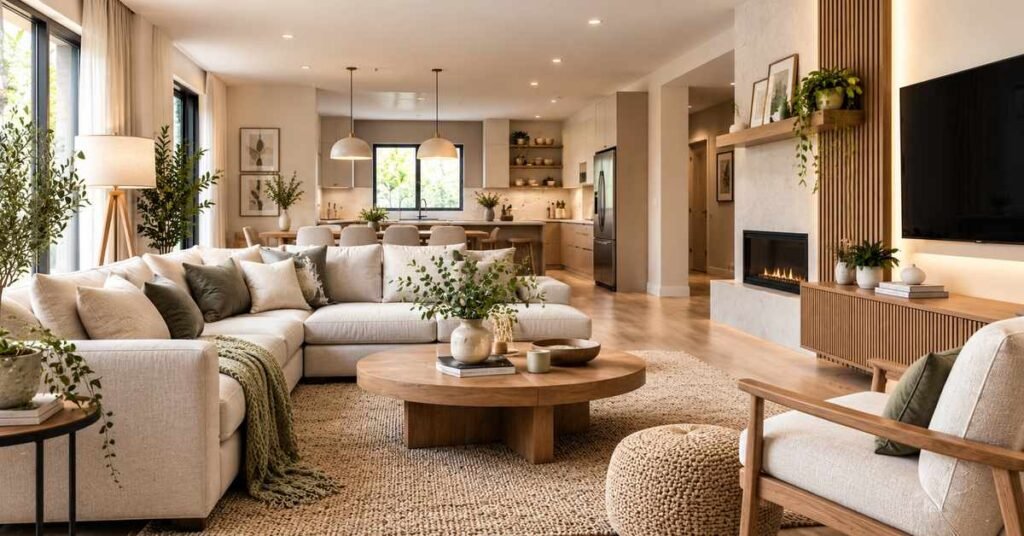
Wood is one of the easiest materials to use in a modern neutral interior. Its natural patterns and warm tones help balance the clean appearance of white walls and simple furniture.
You do not need expensive hardwood furniture to achieve this look. Affordable wooden accessories, secondhand furniture, and wood-effect finishes can also work well.
For a living room, consider a light oak coffee table, a wooden television console, or a simple bookshelf. In a bedroom, wooden bedside tables can add warmth beside cream bedding.
The key is to choose finishes that complement one another.
For example, light oak often works well with warm white, beige, and soft green. Medium brown wood can create a richer appearance alongside cream and taupe. Dark wood adds contrast when used with lighter walls and fabrics.
You do not have to match every wooden object perfectly. Different wood tones can work together when their undertones and overall appearance feel balanced.
Try these simple decorating ideas:
- Use a wooden tray to organize items on a coffee table.
- Add a small wooden stool beside a sofa.
- Choose a natural wood frame for a mirror or artwork.
- Display a wooden bowl on a dining table.
- Use a simple wooden headboard in the bedroom.
If you are working with a limited budget, consider refreshing an existing piece of furniture instead of buying a replacement. Cleaning, sanding, or refinishing may improve its appearance, depending on its condition and material.
Before painting or refinishing furniture, check the manufacturer’s instructions and use suitable protective equipment.
Wood is most effective when it adds warmth without taking over the room. Start with one or two noticeable pieces, then add smaller details if needed.
Improve Natural Lighting and Layer Your Lamps
Lighting affects how colors, furniture, and decorative materials appear inside your home. Even a beautifully decorated room can feel uncomfortable when the lighting is too harsh or too dim.
Start by making the most of the daylight you already have. Keep windows reasonably clear, avoid placing large furniture directly in front of them, and use curtains that allow the desired amount of light into the room.
Light-colored curtains can help maintain a bright appearance, while lined curtains or blinds provide more control over privacy, glare, and heat.
The U.S. Department of Energy explains that thoughtful daylighting can reduce the need for artificial lighting, although the best approach depends on window placement and local climate.
For more information, read the Department of Energy’s guidance on natural light and daylighting.
After improving daylight, add several types of indoor lighting.
Ambient lighting provides general illumination for the room. Ceiling fixtures are a common example.
Task lighting helps with specific activities, such as reading, cooking, or working at a desk.
Accent lighting highlights selected features, such as artwork, shelves, or architectural details.
A living room might use a ceiling light, a table lamp, and a floor lamp near the sofa. A bedroom could combine bedside lamps with soft overhead lighting.
Choose bulbs with a comfortable light color that suits the room. Warm-white lighting often creates a relaxed evening atmosphere, while brighter neutral lighting may be useful for kitchens and work areas.
Avoid relying on one very bright ceiling light for every activity.
Good lighting should make your home easier to use while supporting the calm appearance of your chosen color palette.
Decorate Your Bedroom with Soft Colors and Comfortable Fabrics
A bedroom should feel peaceful and comfortable. Soft colors, simple furniture, and pleasant fabrics can help create a relaxing space without making it look unfinished.
Start with the largest surfaces: walls, flooring, bedding, and curtains. Keeping these elements within a coordinated color palette creates a more organized appearance.
Cream, warm white, beige, and soft taupe are useful choices for bedroom walls and bedding. If you prefer cooler colors, a pale gray can also work well with white sheets and darker accessories.
Layering bedding is an easy way to make a bedroom look more complete. Begin with plain sheets, add a duvet or comforter, and finish with a few cushions or a folded blanket.
You do not need many decorative pillows. Choose a small number that provide useful comfort and complement the room.
Consider these bedroom improvements:
- Use matching or coordinated bedside lamps.
- Add a soft rug beside the bed.
- Choose curtains that suit the room’s lighting and privacy needs.
- Keep bedside tables free from unnecessary clutter.
- Display one meaningful photograph or piece of artwork.
- Use storage baskets to organize smaller belongings.
A simple headboard can become the main feature of the room. Upholstered headboards add softness, while wooden designs introduce a natural element.
If your bedroom is small, avoid oversized bedside tables and bulky decorative furniture. Wall-mounted shelves and compact storage units may help free up floor space.
Remember that comfort matters more than appearance alone. Choose bedding that suits your climate and personal preferences, and keep frequently used items within easy reach.
A well-designed bedroom should feel personal rather than staged. Family photographs, favorite books, and meaningful objects can make a neutral space feel like home.
Design a Clean and Practical Neutral Kitchen
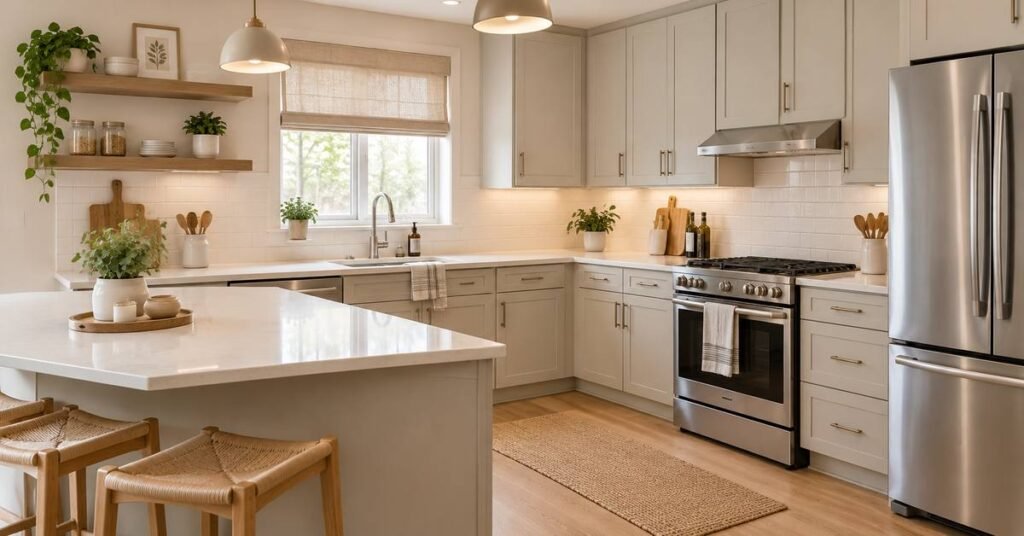
A modern kitchen should look organized while remaining easy to use. Neutral colors can create a bright, balanced appearance, particularly when combined with practical storage and suitable lighting.
White, cream, beige, and light gray are common choices for kitchen cabinets. Wooden details can soften the overall design and prevent the room from looking too plain.
If you have existing cabinets, consider whether they need replacement at all. Cleaning the doors, replacing worn handles, or improving storage may refresh the kitchen without the cost of a full renovation.
For example, cream cabinets with simple black handles create a clear contrast. Light wood shelves can add warmth, while a neutral backsplash keeps the overall design consistent.
Useful kitchen decorating ideas include:
- Keep frequently used work surfaces as clear as possible.
- Store everyday cooking tools in an organized drawer or container.
- Use matching jars for dry ingredients when practical.
- Add a small plant or simple vase away from cooking hazards.
- Choose a durable rug only where it will not create a slipping or tripping risk.
- Use under-cabinet lighting to improve visibility on work surfaces.
Think carefully about materials before making a purchase. Kitchen surfaces need to handle moisture, heat, cleaning products, and regular use.
For example, some natural stones require sealing, while certain wood finishes may need extra protection near water.
Do not choose a surface based on appearance alone. Check the care instructions and make sure it fits your household’s needs.
If you rent your home, focus on changes that can be reversed, such as removable organizers, countertop accessories, and coordinated textiles.
A practical kitchen can look modern without expensive appliances or a complete redesign. Good storage, consistent colors, and clean surfaces often make the biggest difference.
Make Small Rooms Feel More Open
Small rooms require thoughtful planning because every piece of furniture takes up valuable space. A neutral palette can help create a brighter appearance, but furniture size, lighting, and layout are equally important.
Begin by measuring the room. Note the location of doors, windows, and electrical outlets before deciding where furniture should go.
Choose pieces that suit the available space. A compact sofa, a narrow console table, or a wall-mounted shelf may be more useful than several large furniture items.
Furniture with visible legs can create a sense of openness because more of the floor remains visible. However, closed storage may be preferable when you need to hide everyday belongings.
Mirrors can also help reflect light and create a greater sense of depth. Place one where it reflects a pleasant view or available daylight rather than an area you would rather keep out of sight.
Here are more ways to improve a small room:
- Use a consistent color palette across nearby spaces.
- Hang curtains high enough to create a sense of height, where practical.
- Choose furniture with more than one purpose.
- Keep walking paths clear.
- Use wall shelves to free up floor space.
- Limit large decorative objects.
- Store items according to how often you use them.
For example, an upholstered storage bench can provide seating and a place to keep blankets. A small side table can hold a lamp while also serving as a convenient surface for everyday items.
Avoid pushing every piece of furniture against the walls automatically. Sometimes, a slightly different arrangement creates a more comfortable seating area.
The best layout depends on the room’s shape and how you use it. Test different arrangements before purchasing new furniture.
A small room does not need to feel empty to look spacious. It simply needs enough open space for people to move around comfortably.
Bring Nature Indoors with Plants and Natural Details
Plants and natural decorative objects can add life to a neutral interior. Their organic shapes and colors provide contrast without disrupting the overall design.
Green plants work especially well against cream, beige, white, and soft gray backgrounds. You can use one larger plant as a focal point or place a few smaller plants on shelves and side tables.
Choose plants according to the light and temperature conditions in your home. Some plants need bright indirect light, while others tolerate lower-light spaces. Check their care requirements before buying them.
If you have pets or young children, check whether a plant is safe for them before bringing it indoors.
You can also introduce natural details without using live plants. Dried branches, woven baskets, wooden bowls, linen fabrics, and stone accessories can create a similar sense of warmth.
Try placing a simple ceramic vase on a dining table or using a woven basket to store blankets beside the sofa.
The key is to keep natural decorations purposeful. A few well-chosen objects usually look better than many unrelated items placed throughout the room.
Artwork is another way to introduce nature. Landscape prints, botanical illustrations, and photographs of natural scenes can add interest to neutral walls.
Choose frames that complement your furniture. Natural wood, black, and simple metallic finishes are all possible options.
If you enjoy seasonal decorating, replace a few small accessories throughout the year rather than changing your entire room. Fresh flowers in spring or textured throws during colder months can refresh the space without creating unnecessary expense.
Natural details should reflect your lifestyle and preferences. You do not need to follow every design trend to create a beautiful interior.
Decorate on a Budget Without Losing the Modern Look
Creating an attractive home does not require a large decorating budget. Many improvements involve rearranging existing belongings, making careful purchases, and removing items that no longer serve a purpose.
Before buying anything, walk through each room and identify what needs attention. You might discover that the main problem is poor lighting, cluttered surfaces, or furniture placed in the wrong position.
Start with the changes that will make the greatest difference.
For example, replacing old cushion covers may refresh a sofa more affordably than purchasing a new one. Adding a mirror may improve the feeling of brightness, while a simple lampshade can update an existing light fixture.
Here are practical ways to save money:
Reuse what you already own. Move furniture between rooms when suitable, and give useful accessories a new purpose.
Shop secondhand. Look for sturdy furniture, mirrors, lamps, and decorative objects in good condition. Inspect each item before buying it.
Make simple DIY updates. Painting a suitable piece of furniture or changing cabinet handles may refresh its appearance.
Prioritize quality where it matters. Items that receive frequent use, such as sofas, mattresses, and dining chairs, should be comfortable and durable.
Avoid impulse purchases. Measure your space and check that each item fits your existing design before spending money.
Decorate gradually. Complete one room or one area at a time instead of buying everything at once.
A helpful budget strategy is to divide your spending into three groups: essential improvements, useful furniture, and optional decorations.
Handle essential needs first. For example, repair damaged furniture or improve inadequate lighting before purchasing decorative accessories.
You can also create a simple shopping list that includes the item’s size, preferred color, maximum price, and intended use.
The goal is not to make your home look expensive. It is to make it comfortable, attractive, and practical using the money you can reasonably afford to spend.
Visual Guide: Neutral Colors and Materials for Every Room
Choosing colors becomes easier when you can see how different shades and materials work together. Use the following tables as starting points, then adjust the choices to match your home.
Table 1: Neutral Color Palette and Best Uses
| Color | Overall Feel | Best Places to Use It |
|---|---|---|
| Warm white | Bright and welcoming | Walls, ceilings, kitchens |
| Cream | Soft and comfortable | Bedrooms, living rooms |
| Beige | Warm and natural | Sofas, rugs, walls |
| Taupe | Balanced and modern | Furniture, accent walls |
| Light gray | Clean and understated | Cabinets, textiles, accessories |
| Greige | Calm and versatile | Open-plan spaces, hallways |
| Dark brown | Rich and grounded | Wooden furniture, small accents |
| Soft sage green | Natural and gentle | Cushions, artwork, selected walls |
Helpful tip: Choose your wall color after considering your flooring, fixed cabinets, and large furniture. These elements are more expensive to change, so your paint should complement them.
Table 2: Affordable Decorating Updates
| Area | Simple Update | Budget Level |
|---|---|---|
| Living room | Change cushion covers | Low |
| Bedroom | Add coordinated bedding | Low to medium |
| Kitchen | Replace cabinet handles | Low |
| Bathroom | Coordinate towels and accessories | Low |
| Hallway | Add a mirror and simple lighting | Low to medium |
| Dining area | Use a wooden tray or simple centerpiece | Low |
| Small apartment | Add wall-mounted storage | Low to medium |
| Any room | Rearrange existing furniture | Free |
These budget levels are general descriptions rather than fixed prices. Actual costs depend on your location, material choices, product quality, and whether you do the work yourself.
A Simple Formula for a Balanced Room
If you are unsure where to begin, try this practical approach:
- Choose one main neutral shade for the largest surfaces.
- Add one or two complementary colors through furniture and textiles.
- Introduce at least two different textures.
- Include one natural material, such as wood or stone.
- Use suitable lighting for daytime and evening activities.
- Finish with a few personal decorations.
You can adjust this formula to suit your room size, existing furniture, and budget.
Frequently Asked Questions
1. What are the best neutral colors for a modern home?
Warm white, beige, cream, taupe, and greige are versatile choices that work with many furniture styles and natural materials.
2. How can I decorate a neutral home without making it look boring?
Combine different textures, natural wood, comfortable fabrics, artwork, plants, and a few contrasting accessories.
3. Can neutral home decor work in small apartments?
Yes. Light neutral colors, appropriately sized furniture, mirrors, and organized storage can help small apartments feel brighter and more open.
4. How can I create a modern neutral home on a budget?
Rearrange existing furniture, update cushion covers, improve lighting, shop secondhand, and make small changes before buying expensive items.
5. Are neutral interiors still suitable for modern homes in 2026?
Yes. Neutral interiors remain versatile, especially when combined with personal details, natural materials, layered textures, and carefully chosen accent colors.
Conclusion
Creating a beautiful home is not about buying the most expensive furniture or following every decorating trend. It is about choosing colors, materials, lighting, and furniture that work together while supporting your everyday life.
The best Neutral Modern Home Decor Ideas begin with a balanced color palette and grow through simple, thoughtful choices. Warm white walls, comfortable furniture, natural wood, textured fabrics, and suitable lighting can transform an ordinary room into a welcoming space.
[…] affordable option is to create a gallery wall. Collect family photographs, printable artwork, small posters, or […]