


Introduction
A modern home does not need a big bank account. It needs a clear plan, a calm look and a few smart choices. Many people think a stylish room costs thousands of dollars. That is not true. Most of the “designer look” comes from color, light, space and simple shapes, and all of these can be done cheaply.
This guide shares Affordable Modern Home Decor Ideas that real people can use this month. You will learn how to set a budget, pick colors, use paint and lighting, shop secondhand, and style your shelves. You will also see two easy tables that show costs and where to spend your money first.
What Makes Affordable Modern Home Decor Ideas Different From Expensive Design
Every tip uses simple words and small steps. You can do one idea in a weekend or try all of them over a few months. By the end, you will know exactly where to start, what to skip and how to avoid common mistakes.
Quick answer: Modern style means clean lines, simple shapes, calm colors and less clutter. It does not depend on costly brands. A budget-friendly modern room uses fewer items, chosen with care, instead of many items bought in a hurry.
Expensive design often relies on custom furniture, rare materials and paid designers. Budget design uses the same rules in a smarter way. The room feels open. The colors match. Each item has a job or a clear reason to be there.
Here are the core rules of modern style
- Keep surfaces clear. Leave empty space on tables and shelves.
- Use a small color set. Two or three main colors are enough.
- Choose simple shapes. Straight lines and soft curves look modern and cost less than detailed designs.
- Mix textures. Wood, cotton, metal and glass add depth without extra cost.
A good test is to stand at the door and look at the room. If your eye lands on one calm focus, such as a sofa, a bed or a nice lamp, the design is working. If your eye jumps everywhere, remove a few items.
Modern style also lasts longer than trends. Neutral walls and simple furniture will still look good in five years. That saves money, because you will not need to redo the room again soon.
Set a Simple Budget Before You Shop
Quick answer: Pick one room, set a total amount, split it into groups, and keep 10 percent for surprises. A written plan stops random buying, which is the main reason people overspend on decor.
Start with one room only. Trying to fix the whole house at once spreads your money too thin. Choose the room you use most, such as the living room or bedroom.
Follow these steps
- Write your total budget. Be honest about what you can spend.
- Make a list of needs. Paint, a lamp, a rug or curtains may come before small items.
- Split your money. Give the biggest share to things you see and touch every day.
- Save 10 percent. Costs often run a little higher than planned.
- Add a “wait” rule. If you like something in a store, wait 24 hours before buying.
Take clear photos of the room before you start. Photos help you see problems your eyes miss, like a dark corner or a crowded wall. Measure walls, windows and floor space too. Wrong sizes are one of the most common causes of returns and wasted money.
Pick a Calm Color Palette
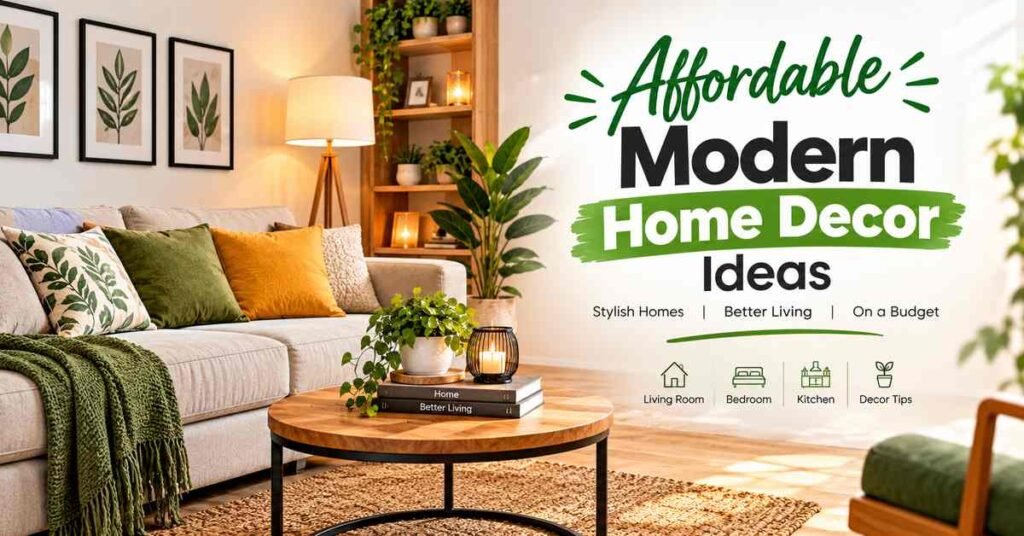
Quick answer: Use one main neutral, one soft supporting color and one small accent. This three-color rule makes a room look planned and modern, and it helps you reject items that do not fit.
Color is the cheapest way to change how a room feels. It costs far less than new furniture, and the effect is bigger.
A simple palette looks like this
- Main color (about 60 percent): walls, big furniture. Try white, soft gray, beige or warm cream.
- Support color (about 30 percent): curtains, rugs, bedding. Try sage green, muted blue or light wood tones.
- Accent color (about 10 percent): pillows, art, a vase. Try terracotta, mustard or deep green.
Warm neutrals and earthy tones are popular right now because they feel calm and friendly. Still, pick colors you enjoy, not just what is popular.
Test paint on a small area first and check it in morning, afternoon and evening light. A color can look very different as the light changes. Cheap sample pots are worth the cost.
Carry your palette into every room, even if each room has a different accent. This makes the whole home feel connected and larger, because the eye moves smoothly from space to space. Use Paint for the Fastest Room Refresh
Quick answer: A fresh coat of paint is one of the lowest-cost ways to modernize a room. It hides wear, brightens space and sets the base for your whole palette, often for less than the price of one armchair.
Paint can change old walls, doors, cabinets and even furniture. Pick the right spot and the right product, and a small spending amount goes a long way.
Easy paint projects
- One accent wall. Paint the wall behind your bed or sofa in a deeper shade.
- Interior doors. A dark or soft color on old doors looks fresh and modern.
- Kitchen cabinets. With cleaning, light sanding and good primer, tired cabinets can look new.
- Old furniture. A matte finish in a simple color can turn a dated dresser into a modern piece.
Prep work matters more than the paint brand. Clean the surface, fill holes, sand lightly and tape the edges. Rushing this step causes peeling and uneven color.
Choose low-odor paint when you can, and open windows while you work. The U.S. Environmental Protection Agency explains how some paints release chemicals into indoor air and how to reduce exposure, and you can read more in its guide to volatile organic compounds in indoor air.
Plan paint days when you can keep the room well ventilated, and keep children and pets away from wet paint.
Lighting That Looks Expensive but Is Not
Quick answer: Layer three types of light: soft overhead light, task light for reading or cooking, and accent light for mood. Warm LED bulbs and a few well-placed lamps make a room feel modern and save energy.
Lighting changes everything. A room with one harsh ceiling bulb feels flat and cold, even if the furniture is nice. Layered light feels warm and rich.
Use these three layers
- Ambient light: the main light of the room, such as a ceiling fixture.
- Task light: a desk lamp, a reading light or lights under kitchen cabinets.
- Accent light: a small lamp on a shelf, string lights or a wall light that highlights art.
Choose bulbs with a warm color for living areas and bedrooms. Many people like a softer glow in the evening. Dimmer switches or plug-in dimmers give you control without hiring an electrician.
LED bulbs use much less energy than old bulbs and last longer. The U.S. Department of Energy gives clear advice on choosing lighting to save money, including how to read the labels on bulb packages.
Simple, low-cost light upgrades include a paper or fabric lampshade, a floor lamp in a dark corner and new switch plates. Place lamps at different heights so light reaches walls and corners, not just the center of the room.
Budget Cost Chart: Where Your Money Goes Furthest
Quick answer: Paint, lighting and textiles give the biggest change for the lowest cost. Furniture and large items cost more, so buy those secondhand or slowly over time.
This section turns the tips above into easy numbers. Prices are rough estimates and change by city and store, so always check local prices. These Affordable Modern Home Decor Ideas are ranked by cost, time and how much they change a room.
Common updates compared
| Idea | Estimated cost | Time needed | Visual impact |
| Paint one room | Low to medium | 1-2 days | Very high |
| Accent wall | Low | A few hours | High |
| New lamp and warm bulbs | Low | 15 minutes | High |
| Curtains and rod | Low to medium | 1 hour | High |
| Large rug | Medium | 15 minutes | High |
| Secondhand side table | Low | Shopping time | Medium |
| Framed prints or art | Low | 1 hour | Medium |
| Indoor plants | Low | 30 minutes | Medium |
| New sofa | High | Delivery time | Very high |
A simple budget split for one room
| Category | Share of budget |
| Paint and wall work | 20% |
| Lighting | 20% |
| Textiles (rug, curtains, pillows) | 20% |
| Furniture (mostly secondhand) | 25% |
| Plants, art and small decor | 10% |
| Safety buffer for surprises | 5% |
Adjust the shares to match your room. If your walls are in good shape, move that money to furniture or lighting. If your floor is bare, give more to a rug. The goal is to spend where you will notice the change most.
Easy DIY Projects You Can Finish in a Weekend
Quick answer: Simple DIY projects, like framed prints, painted pots and floating shelves, add personal style for very little money. Start with small tasks, and learn each skill before moving to bigger ones.
DIY is one of the best ways to enjoy Affordable Modern Home Decor Ideas without paying for ready-made items. It also makes your home feel more personal.
Try these beginner projects
- Gallery wall. Print free or low-cost art, buy simple frames and arrange them in a grid. Use paper templates on the wall first so you avoid extra holes.
- Painted planters. Paint plain clay pots in your accent color for a matching look.
- Floating shelves. Cut wood to size, sand it and mount it with the right brackets for your wall type.
- Headboard from fabric. Wrap a plywood panel with foam and fabric.
- Wall-mounted hooks. Use a simple wooden rail with hooks for coats, bags or plants.
Safety comes first. Wear eye protection and gloves, work in a clear space and follow the instructions on your tools. Use wall anchors rated for the weight you plan to hold, and find studs when hanging heavy items.
Secondhand and Thrift Finds Worth Buying
Quick answer: Secondhand shops, online marketplaces and garage sales offer strong furniture at low prices. Look for solid wood, simple shapes and good bones, then clean, repair or repaint to match your modern style.
Older furniture is often made better than cheap new items. Solid wood tables, metal frames and glass shelves can last for decades. Buying used also reduces waste, which many people care about.
Good items to hunt for
- Wooden side tables and coffee tables
- Mirrors with simple frames
- Ceramic vases and bowls
- Lamp bases (you can add a new shade)
- Chairs with strong frames that can be repainted or reupholstered
How to check quality
- Test stability. Push and shake the piece to find loose joints.
- Check drawers. They should open smoothly.
- Smell it. Strong smoke or damp smells are hard to remove.
- Inspect for pests. Look in seams and corners, especially in upholstery.
- Bring a tape measure. Check size before you pay.
Avoid used items that might be unsafe. Be careful with old cribs and children’s furniture, because safety rules have changed over time. Choose current, approved products for children.
When using online marketplaces, meet in a public place and bring a friend if you can. Ask for clear photos and exact sizes. Be patient, because the best finds sell fast, and checking listings a few times a week helps.
Textiles, Plants, Art and Shelf Styling
Quick answer: Soft items like rugs, curtains and pillows add warmth, while plants, art and styled shelves add life. Keep the number of items small and use your color palette so the room stays clean and modern.
These small touches make a room feel finished. They also cost less than furniture and are easy to swap when you want a change.
Textiles
- Choose a rug large enough for the front legs of your sofa to sit on it.
- Hang curtains high and wide to make walls look taller.
- Mix two or three textures, such as cotton, linen-look fabric and a chunky knit.
Plants
- Pick easy plants, such as pothos, snake plant or ZZ plant, if you are new.
- Check light needs before buying.
- Use simple pots in matching colors.
Art
- Print your own photos or free public domain art in simple frames.
- Hang art at eye level, about the center of the picture at standing eye height.
Shelf styling
- Group items in odd numbers, like three.
- Mix heights, such as a tall vase, a short bowl and a stack of books.
- Leave empty space so the shelf can “breathe.”
Edit often. If a surface looks crowded, remove one item. The modern look comes from restraint, which is also good for your wallet because you buy less.
Mistakes to Avoid and Home Safety Tips
Quick answer: The most common mistakes are buying without measuring, copying trends you do not like, and ignoring safety. Plan first, choose items you love and secure anything that could fall or tip over.
Many wasted dollars come from a few simple errors. Avoid these
- Buying everything in one matching set. It can feel flat. Mix pieces for a more natural look.
- Skipping measurements. Furniture that is too big or too small spoils the room.
- Following every trend. Trends fade. Choose a few and keep the base neutral.
- Buying very cheap items that break fast. Spend more on items you use daily, like a mattress or sofa, and save on items you rarely touch.
- Overcrowding. Too many small items make a room feel messy.
- Forgetting storage. Baskets and closed cabinets hide clutter.
Safety matters too. Tall furniture such as bookcases and dressers can tip over, especially in homes with young children. The U.S. Consumer Product Safety Commission explains how to anchor furniture and TVs in its Anchor It! safety campaign.
Also remember these safety points
- Keep cords away from walkways and children.
- Use bulbs with the right wattage for each fixture.
- Never block exits or windows with furniture.
- Ventilate when painting or using strong glue.
For more help with room layouts, see our guide on [INTERNAL LINK: small living room layout tips]. If you are ready to plan your shopping, read [INTERNAL LINK: how to build a home decor budget] and [INTERNAL LINK: best thrift store shopping checklist].
Frequently Asked Questions
How can I decorate my home in a modern style with a small budget?
Start with paint, lighting and a simple color palette, then add secondhand furniture and a few textiles. Buy slowly and measure before you shop.
What is the cheapest way to make a room look modern?
Declutter, paint the walls a calm color and swap harsh bulbs for warm LEDs. These steps cost little and change the look fast.
Which colors look modern and cost nothing extra?
Warm white, soft gray, beige, sage green and muted blue all look modern. Paint prices are usually the same no matter which color you choose.
Is secondhand furniture a good choice for modern homes?
Yes, if it is well built and clean. Solid wood and metal pieces can look modern with fresh paint or new hardware.
Do Affordable Modern Home Decor Ideas work in rented homes?
Yes. Use lamps, rugs, curtains, removable hooks and plants, and ask your landlord before painting or drilling.
Conclusion
You do not need a huge budget to make your home look modern and welcoming. Plan one room, pick a calm color palette, add warm layered lighting, and shop smart with secondhand finds and simple DIY projects. Keep your shelves light, your colors few and your safety checks in place. Small, steady changes usually beat one big, rushed purchase.
Remember that a good home is one you enjoy living in every day. The ideas in this guide are tools, not strict rules, so take what suits you and leave the rest. Check prices in your own area and measure every space before you buy.
[…] and cream make rooms feel open, while beige and light brown add warmth. Muted green brings a natural touch, and charcoal or black […]